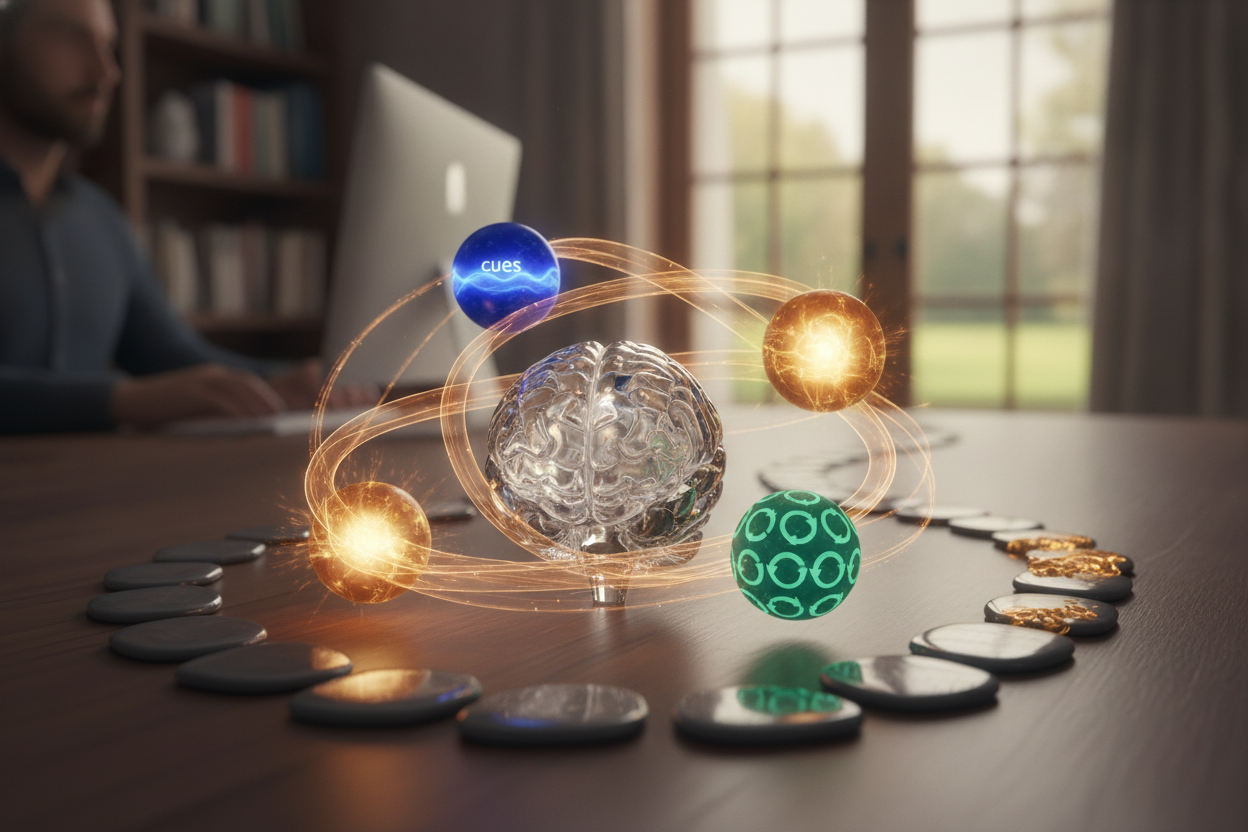
Habits are not just about willpower. They are shaped by psychology, especially the way the brain responds to cues, rewards, and repetition. Once you understand how behavior forms, you can build habits with much more intention.
Most habits begin with a cue. A time, place, emotion, or event tells your brain what to expect. If you study after dinner every night, the end of dinner becomes the signal. The clearer the cue, the easier it is for the behavior to repeat.
The reward matters too. Your brain remembers what feels good or useful, even in small ways. A habit becomes easier to maintain when it gives a sense of completion, relief, progress, or comfort. That is why checking off a task or seeing visible progress can be surprisingly motivating.
Repetition strengthens the loop. The more often a behavior happens in the same context, the less effort it takes to begin. This is why consistency is more effective than intensity. A modest habit repeated over time can reshape your routine far more than an extreme plan that fades quickly.
When you understand the psychology behind habits, you stop treating change like a mystery. You can design cues, make rewards clearer, and make the action smaller. That is how behavior becomes easier to repeat and easier to trust.
Leave a Reply